CME’24 took place in in Lublin, Poland on 24-27 June 2024 and was hosted by the Institute of Mathematics in the Faculty of Mathematics, Physics and Computer Science of the University of Maria Curie-Skłodowska.
CME 2024 programme contained:
- Plenary lectures
- Working seminars (on three educational levels)
- Research reports
- Workshops
- Poster session
CME 2024 plenary speakers:
- Mirosława Sajka
Department of Mathematics
University of the National Education Commission in Krakow
Poland
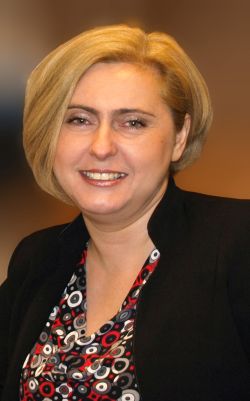
Educational resources in mathematics – the interplay between research and school practice
Abstract: Negative numbers, algebraic expressions and functions are among the most fundamental mathematical topics and, at the same time, cause many difficulties for students, therefore they require well-planned didactic approaches and well-prepared educational resources in the mathematics classroom. In this talk, I will present approaches developed during my studies on these issues. Firstly, an algebraic approach towards shaping the notion of ‘minus’ in school mathematics will be presented in the context of both negative numbers and algebraic expressions. This approach has its origins in historical research on the emergence of the concept of negative numbers in two theoretical models. One of them is more elementary, so its didactic model will be provided in the form of tokens, which is extended for the purpose of teaching basic algebraic expressions. The evaluation of this approach will be also discussed. Secondly, the enhancement of covariational functional thinking in secondary school students will be discussed. Covariational thinking can be introduced to students in the early years of mathematics, whereas in secondary school, where we introduce and use the concept of function, the implementation of covariational functional thinking in mathematics teaching is sometimes neglected in favour of the other aspects of functions, such as: function as input-output assignment, correspondence and mathematical object. However, covariational functional thinking is essential for understanding differential calculus, but also for solving modelling problems. Based on empirical research using methodological triangulation, including the use of eye-tracking, I will present the difficulties diagnosed in students’ covariational functional thinking, including understanding, interpreting and using graphs of functions in the context of motion analysis. I will then outline the educational resources that have been developed to prevent such deficiencies and to support covariational functional reasoning.
- Chrysanthi Skoumpourdi
Department of Pre-school Education and Educational Design
University of the Aegean
Greece
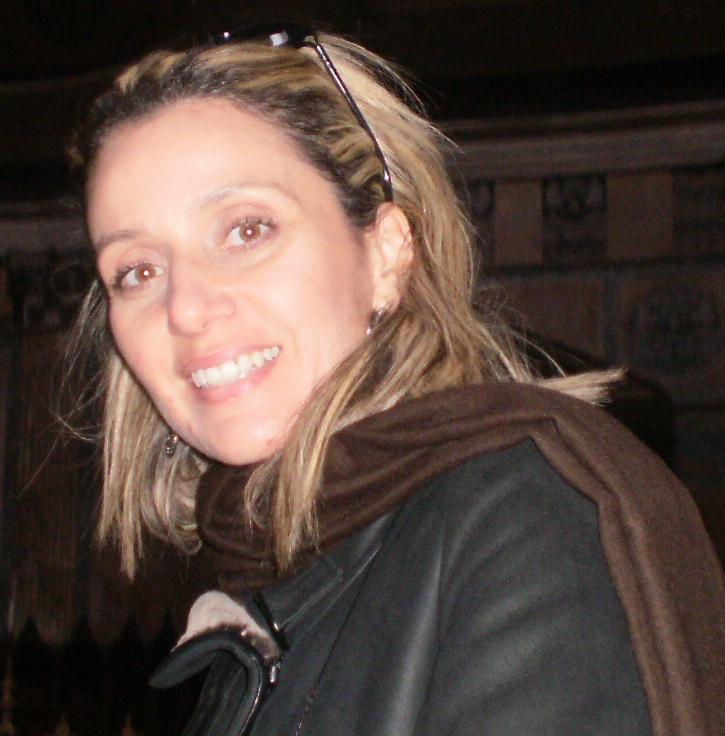
The pathways of ‘additional’ educational materials up to the mathematics classrooms
Abstract: The teaching and learning of mathematics, due to its abstract nature, are enhanced through the utilization of provided or/and ‘additional’ educational materials. The wide variety of the available ‘additional’ mathematics’ educational materials requires teachers to take specific decisions for the designed integration of these materials in their teaching practice. The definition of the concepts of provided and ‘additional’ educational materials (AEM), the reflection of educators’ decisions on the position of these educational materials in the mathematics classroom, as well as the determination of the relationship between teachers, students, and AEM are issues that will be discussed both theoretically and practically, through specific examples. Investigating the above pathways that AEM could follow, up to the mathematics classrooms, as fundamental aspects of their designed integration, one can recognize their multidimensional relationship with teachers, as well as the learning opportunities they may (or may not) offer to students.
- Daniel Walter
TU Dortmund University
Germany
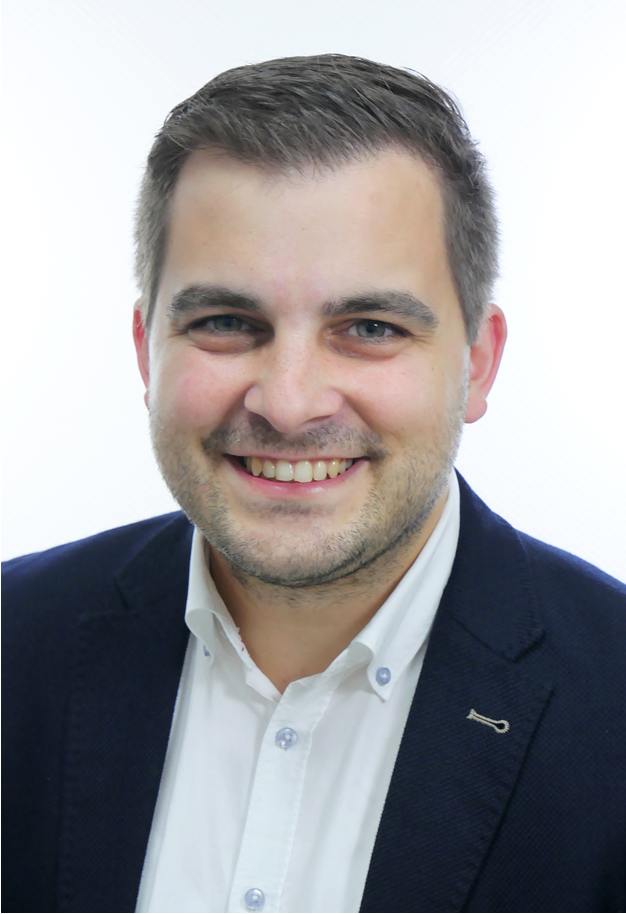
Potentials of digital educational resources in the mathematics classroom – didactical considerations and empirical findings
Abstract: Digital media are increasingly finding their way into classrooms as educational resources – also with regard to mathematics lessons in primary schools. A vitalized discussion about the potentials and limitations of digital media for learning in schools can be observed in the scientific community. However, the question of how digital media can be used beneficially and subject-related is by no means new. Back in 1981, Freudenthal already formulated thirteen major problems of mathematics education, including the following: „How can calculators and computers be used to arouse and increase mathematical understanding?” Although more than four decades have passed since then and a number of positive examples on the use of digital media are certainly available, it can be stated retrospectively that the integration of digital media has not yet been as successful as one might have hoped.The reasons for this can certainly be manifold: from organizational aspects such as the provision of suitable infrastructure to didactic aspects and the availability of adequate digital learning opportunities and appropriate teaching concepts. In order to specifically address concepts for teaching and learning mathematics with digital media, I will focus on subject-specific potentials that arise primarily through the availability of digital media. I will first illustrate these potentials using examples and then use empirical studies to discuss how they are used by learners.
Working seminars
Leaders of CME’24 working seminars:
- kindergarten and primary school (3–9-year-olds): Eva Nováková (Czech Republic), Paola Vighi (Italy)
- primary school (10–13-year-olds): Ingrid Semanišinová (Slovakia)
- secondary and upper-secondary school (14–18-year-olds): Lambrecht Spijkerboer (The Netherlands)
Descriptions of the CME’24 working seminars:
- From artistic paintings to mathematics
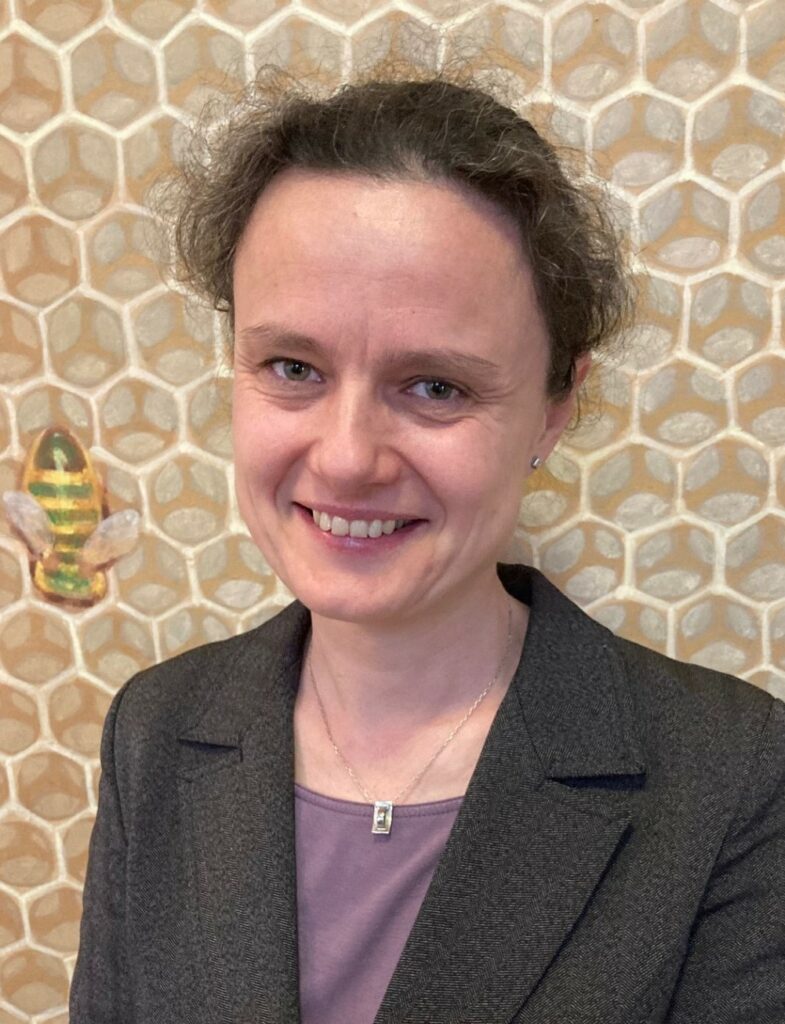
Eva Nováková
Assistant professor
Department of Mathematics
Masaryk University, Brno
Czech Republic
Paola Vighi
Professor of Mathematics
University of Parma
Italy
The aim of the seminar is to show some examples of evolution of geometrical knowledge in the environment of art. In other words, we want to show ways of supporting early geometrical thinking and understanding based on particular artworks.
The geometry often plays only limited role in early mathematical education. However, geometry is an integral part of the development of the mathematical component of education in young children. The ability to recognize shapes is substantial part of early geometrical knowledge, and deep teacher’s insight into geometry is essential for the efficiency of their teaching.
Two activities will be discussed. Participants will be involved in problem solving and subsequent analysis. They will be also asked to analyze some videos The first activity will be based on the reproduction of a painting by manipulation of cardboard shapes.It involves the concept of space, the analysis of geometrical figures and their mutual positions and especially the geometrical transformations. The second activity will deal with transparent coloured shapes, and it will show how new shapes could be created by superimposing two transparencies with different colors.
During the working seminar, participants are expected to work together and to exchange opinions and experiences.
2. Designing activities to support the development of the mathematics teacher’s specialised knowledge
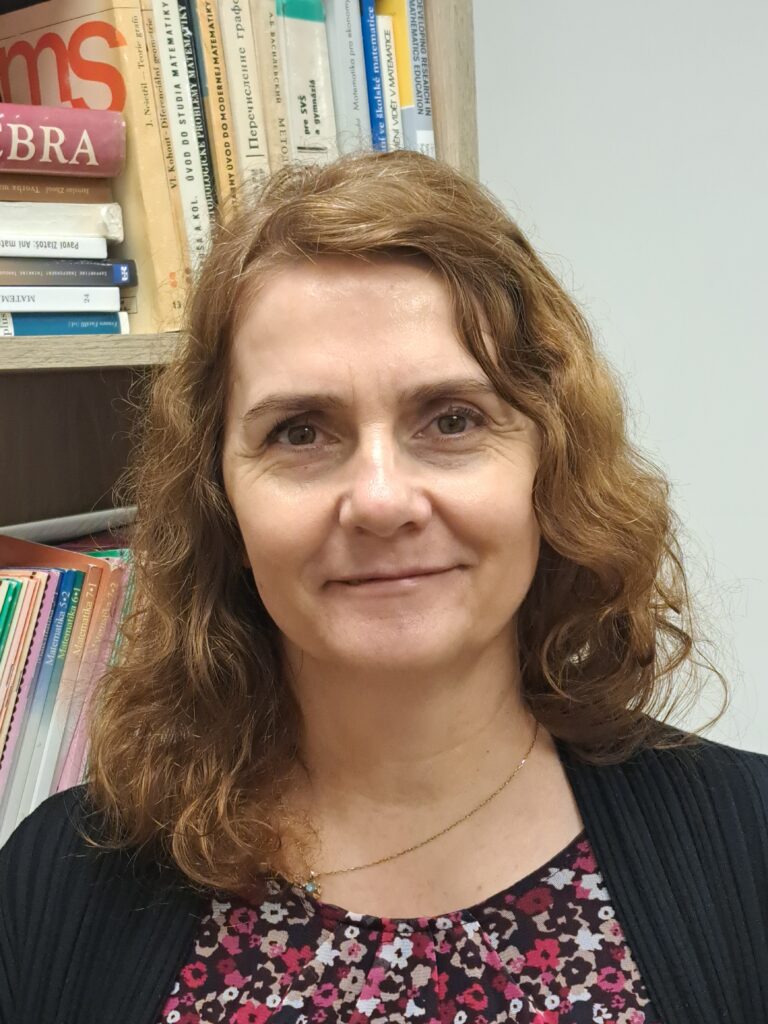
Ingrid Semanišinová
Associate professor
Pavol Jozef Šafárik University in Košice
Faculty of Science
Institute of Mathematics
Slovak Republic
ingrid.semanisinova@upjs.sk
Current research in mathematics education shows that one of the main factors influencing the quality of mathematics learning is teachers’ knowledge. To bridge the gap between teacher education and the practice that teachers will carry out in the classroom, we should keep in mind what a teacher must do when he or she is teaching. The workshops will therefore focus on creating activities and tasks for pre-service teachers and in-service teachers with the aim of developing the mathematics teacher’s specialised knowledge in two main areas – mathematical knowledge and pedagogical content knowledge of the mathematics teacher. We will focus on creating tasks and activities that are formulated in the context of primary school practice and that aim to deepen understanding of mathematical content and uncover pedagogical problems. Indeed, much of the training of pre-service teachers cannot take place directly in the classroom but can be carried out using appropriate materials.
The teacher’s work begins long before the lesson, and after the lesson, the teacher must reflect on the lesson and plan the next one. For this whole process to be effective, it is useful to have a formal framework to help us reflect systematically on different aspects of pupils’ learning progress. The Mathematics Teacher’s Specialised Knowledge (MTSK) model (Carrillo et al., 2018) will be such a framework for us during the workshop. The MTSK model serves as a conceptualisation that guides the kind of knowledge that pre-service teachers should construct. Therefore, in the first part of the workshop we will be introduced to the MTSK model. We will demonstrate and solve specific tasks and activities for primary school teachers that focus on the different components of the model. In the second part of the workshop, we will use the materials provided to create appropriate activities and tasks aimed at developing the different components of the MTSK model. The workshops will be based on group work with intensive interactive discussion.
Reference
Carrillo, J., Climent, N., Montes, M., Contreras, L., Flores-Medrano, E., Escudero-Ávila, D., Muñoz-Catalán, M. C. et al. (2018). The mathematics teacher’s specialised knowledge (MTSK) model. Research in Mathematics Education, 20, 236–253.
3. Dealing with differences in the mathematics classroom
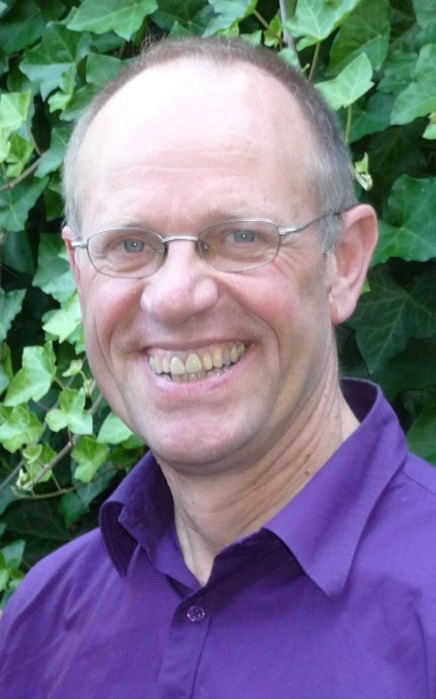
Lambrecht Spijkerboer
Trainer/consultant for education
Independent Entrepreneur
STA
The Netherlands
STA@Lambrechtspijkerboer.nl
In mathematics classrooms we are faced by (big) differences among students in their performance. There are low and high achievers, there are students with a lack of motivation, there are students with math anxiety, there are slow starters, etc. Some students have the skills but are not interested enough in mathematics, others are working hard but nevertheless have low scores. Mathematics teachers should be able to handle those differences in a way that more students will get connected to the mathematics lessons.
In this working seminar we will use different approaches to deal with differences in the mathematics classroom. There are many theories on learning, teaching and motivation, and we will try to make use of these findings to transform our lessons into challenging and motivational experiences for students. Among other possibilities, working with materials and other educational resources are one of the options to explore. This working seminar is not only a presentation of possible solutions; we will also share different experiences of the participants to learn from the differences of each other.
The following issues will be on our focus:
- Stages in learning with materials, including examples for the mathematics classroom.
- Designing lessons by different ways of working to deal with differences in the mathematics classroom.
- Working with level-raising questioning and designing SSDD-exercises (same surface, different deep).
- Implementation of formative assessment and self-responsibility in learning mathematics.
References
Haenen, J. (2001). Outlining the teaching–learning process: Piotr Gal’perin’s contribution. Learning and Instruction, 11(2), 157-170.
Hattie, J. (2009). Visible learning. Routledge.
Van Ast, M., de Loor, O., & Spijkerboer, L. (2024). Effectief leren, de docent als regisseur [Effective learning, the teacher as director]. Noordhoff.